
Dr. Jaromír Mrňka
Research Fellow
+420 222 542 068
Zur Person
Jaromír Mrňka Ph.D. (*1988, Mähren) ist ein tschechischer Historiker und Sozialwissenschaftler. Sein Studium in Prag, Berlin und München schloss er 2017 mit einer Promotion an der Prager Karlsuniversität ab. Seine Dissertation „Politik und soziale Praxis kollektiver Gewalt in den böhmischen Ländern 1944–1946“ wurde 2019 unter dem Titel „Die Grenzen der Menschheit“ („Limity lidskosti“) veröffentlicht. Seine Forschungsinteressen liegen in der modernen europäischen Wirtschafts- und Sozialgeschichte, Sozialtheorie und Forschungsmethodik. Dabei konzentriert er sich vor allem auf den Wertewandel, den sozialen Konsens und die Legitimität der sozialen Ordnung im Rahmen der grundlegenden Meilensteine der tschechischen Gesellschaft im 20. Jahrhundert. Er analysierte die Formen kollektiver Gewalt in den tschechischen Ländern in den Jahren 1944–1946, wobei er sich auf die sozialen Mechanismen konzentrierte, die hinter ihrer Eskalation zu Massengräueltaten stehen. Weiter arbeitete er an einem Forschungsprojekt, das sich mit Denunziation als gesellschaftlicher Praxis in Böhmen während des Zweiten Weltkriegs und seiner Nachwirkungen beschäftigt, und erforschte gleichzeitig Formen konfliktbedingter sexueller Gewalt in Tschechien zum Ende des Zweiten Weltkriegs.
Forschungsschwerpunkte
- Wirtschafts- und Sozialgeschichte der Neuzeit
- Theorie und Methodologie der Geschichtswissenschaft
- Alltagsgeschichte der modernen Diktaturen
- Geschichte der Böhmischen Länder mit dem Schwerpunkt in zweiter Hälfte des 20. Jahrhunderts
- Queer & Gender History
Aktuelles Forschungsprojekt:
- „Sozialistische Lebenswelten und Unterwelten: Machtorganisation des Stadtraums in den spätsozialistischen Großstädten Prag, Warschau und Ost-Berlin“
Publications
Books
MRŇKA, Jaromír: Limity lidskosti, politika a sociální praxe kolektivního násilí v českých zemích 1944–1946 („Grenzen der Menschlichkeit, Politik und soziale Praxis kollektiver Gewalt in den böhmischen Ländern 1944–1946“). Praha 2019, 343 S.
MRŇKA, Jaromír: Svéhlavá periferie, Každodennost diktatury KSČ na příkladu Šumperska a Zábřežska 1945–1960 („Eigensinnige Peripherie, Alltag der Kommunistischen Parteidiktatur am Beispiel von Bezirken Šumperk und Zábřeh 1945–1960)“. Praha 2015, 218 S.
Edotorials
KONRÁD, Ota – BARTH, Boris – MRŇKA, Jaromír (eds.): Collective Identities and Post-War Violence in Europe 1944–48. Reshaping the Nation. Palgrave Macmillan, Cham 2021, 345 S.
MRŇKA, Jaromír (ed.): Beyond the Revolution in Russia: Narratives – Concepts – Spaces. 100 years since the event. Praha 2021, 314 S.
Chapters in Books
MRŇKA, Jaromír: Polní továrny a venkovská města, zemědělství a venkov mezi kolektivizací, plánováním a průmyslovou velkovýrobou v padesátých až osmdesátých letech 20. století (Feldfabriken und Landstädte, Landwirtschaft und Land zwischen Kollektivierung, Planung und industrieller Massenproduktion in den 1950er bis 1980er Jahren), in: SOMMER, Vítězslav a kolektiv: Řídit socialismus jako firmu, technokratické vládnutí v Československu 1956-1989 (Sozialismus als Unternehmen betreiben, technokratische Regierungsführung in der Tschechoslowakei 1956-1989). Ústav pro soudobé dějiny AV ČR, NLN, Praha 2019, S. 115–137.
MRŇKA, Jaromír: Mládež nová, mládež Gottwaldova? Období poloviny šedesátých let a obrodný proces v Československu jako generační zlom (Die neue Jugend, Gottwalds Jugend? Die Zeit der Mitte der sechziger Jahre und der Wiederaufbauprozess in der Tschechoslowakei als Generationenwende), in: Předjaří, Československo 1963–1967, eds. PETRÁŠ, J. – SVOBODA, L., Praha 2016, S. 154–164.
MRŇKA, Jaromír: "Odhalením chyb ukazujeme svoji sílu." Proměny myšlenkového světa lokálních stranických elit v průběhu roku 1956 na příkladu Šumperska a Zábřežska („Wir zeigen unsere Stärke, indem wir Fehler aufdecken.“ Veränderungen in der Gedankenwelt der lokalen Parteieliten im Jahr 1956 am Beispiel von Šumperk und Zábřeh Bezirken), in: Československo 1954-1962, eds. PETRÁŠ, J. – SVOBODA, L., Praha 2015, S. 465–474.
Essays
MRŇKA, Jaromír: Border of Conflict. The Czech Lands and Collective Violence in the Crisis Year of 1938 and the Initial Period of Nazi Rule, in Dějiny – Teorie – Kritika (History – Theory – Criticism) Journal, No. 1, 2023, S. 33–67, DOI: 10.14712/24645370.3057.
MRŇKA, Jaromír: The Moment between Occupation and Freedom. Forms of Collective Violence at the End of World War II in the Czech Lands, in Zeitschrift für Ostmitteleuropa-Forschung / Journal of East Central European Studies, roč. 2020, sv. 69, č. 4, p. 471–494.
MRŇKA, Jaromír – BALOUN, Pavel: „Tábory pro darebáky, povaleče a cikány“. Příspěvek k výzkumu politiky a praxe kriminalizace „práce se štítícího“ obyvatelstva za druhé republiky a protektorátu (1938–1942), ‘Camps for Scoundrels, Layabouts, and Gypsies.’ Contribution to Research into the Policy and Practice of Criminalisation of ‘Work-Shy’ Population During the Second Czechoslovak Republic and the Protectorate (1938–1942), („Lager für Schurken, Penner und Zigeuner“. Ein Beitrag zur Erforschung der Politik und Praxis der Kriminalisierung der „Schutzarbeit“ der Bevölkerung in der Zweiten Republik und im Protektorat (1938–1942), in: Dějiny – teorie – kritika, č. 2/2020, S. 191–221.
MRŇKA, Jaromír: „V naší zemi bude konec války psán krví.“ Kolektivní násilí roku 1945 v českých zemích jako politika, kultura a sociální praxe. | “In our land the end of the war is going to be written by blood.” Collective Violence of the Year 1945 in the Czech Lands as Politics, Culture and Social Practice, in: Drama v přelomu. Rok 1945 v individuálních i kolektivních osudech | Dramas of Rupture: 1945 in Personal and Collective Fates; Střed | Centre, roč. 2016, č. 2016/2, S. 66–91.
MRŇKA, Jaromír: Svéhlaví aktéři a (bez)mocná diktatura. Dějiny každodennosti a výzkum mentalit zemědělského obyvatelstva na příkladu kolektivizace v pohraničí českých zemí (Eigensinnige Akteure und eine (machtlose) Diktatur. Alltagsgeschichte und Forschung zur Mentalität der landwirtschaftlichen Bevölkerung am Beispiel der Kollektivierung in den Grenzgebieten der böhmischen Länder), in: Východočeské listy historické, č. 32, 1/2015, S. 229–236.
Akademische Ämter, Mitgliedschaften, Auszeichnungen
- Vorstandsvorsitzender der Gesellschaft für Queer Memory (SPQP), seit 2023
- Leiter der Arbeitsgruppe Alltagsdiktaturen, in den Jahren 2020–2023
- Externes Mitglied der Cold War Research Group, seit 2018
- Jerzy-Giedroyc-Preis, Nominierung, 2017.
- DAAD-Stipendiat, Ludwig-Maximilians-Universität München, 2015–2016
- Gaststipendiat des Collegiums Carolinum, 2014
- DAAD-Stipendiat, Freie Universität Berlin, 2013
- Gründungsmitglied und erster Vorsitzender des Vereins der Geschichtsstudenten der Philosophischen Fakultät der Karls-Universität (FFabula), gegründet 2010
Latest news
Apr
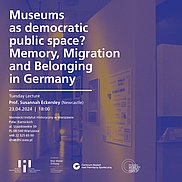
Canceled: Prof. Susannah Eckersley (Newcastle): Museums as democratic public space? Memory, Migration and Belonging in Germany (Kopie 1)
We regret to inform you that the lecture by Prof. Susannah Eckersley (Newcastle)…
Apr
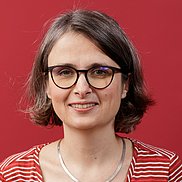
Magdalena Saryusz-Wolska ist neue Direktorin des Deutschen Historischen Instituts Warschau
Zum 1. April 2024 hat die Soziologin und Kulturwissenschaftlerin Magdalena…
Apr