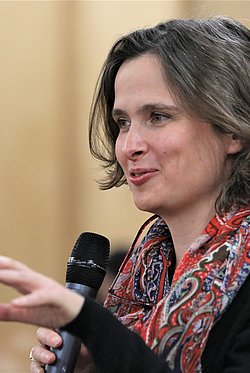
prof. dr hab. Magdalena Saryusz-Wolska
dyrektorka
+48-22-525 83-00
Nota biograficzna
ur. w 1980 r. w Łodzi; 1999-2005: studia kulturoznawstwa oraz socjologii na uniwersytetach w Łodzi, Giessen i Moguncji; 2008: obrona doktoratu na Uniwersytecie Łódzkim (temat: „Pamięć miasta. Filmowe i literackie reprezentacje przestrzeni miejskich na tle teorii pamięci zbiorowej”); od 2008: adiunkt w Instytucie Kultury Współczesnej Uniwersytetu Łódzkiego; 2010-2015: ekspertka w Centrum Badań Historycznych Polskiej Akademii Nauk w Berlinie i koordynacja projektu „Modi memorandi. Leksykon kultury pamięci”; od 2015: pracowniczka naukowa w Niemieckim Instytucie Historycznym w Warszawie; 2016: habilitacja na Uniwersytecie Warszawskim (temat: „Ikony normalizacji. Kultury wizualne Niemiec 1945-1949”); 2018-2020: profesura gościnna oraz stypendium im. Aleksandra von Humboldta na Uniwersytecie im. Jana Gutenberga w Moguncji. Od 1 kwietnia 2024 r. dyrektorka Niemieckiego Insytutu Historycznego w Warszawie.
Zainteresowania badawcze
Historia filmu i mediów po 1945 roku, kultury wizualne, teorie pamięci zbiorowej i kulturowej, badania recepcji. Aktualnie kieruje projektem „Infrastruktury pamięci”.
Publikacje
Ausgewählte Publikationen/ selected publications/ wybrane publikacje
Monographien/ monographs/ monografie
Microhistories of Memory. Remediating the Holocaust by Bullets in Postwar West Germany, trans. Alexander Simmeth, New York and Oxford: Berghahn Books 2023.
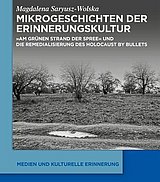
Mikrogeschichten der Erinnerungskultur. „Am grünen Strand der Spree“ und die Remedialisierung des Holocaust. Berlin and Boston: De Gruyter York 2022, open access: https://doi.org/10.1515/9783110745528
Bilder der Normalisierung. Gesundheit, Ernährung und Haushalt in der visuellen Kultur Deutschlands 1945-1948, Bielefeld: Transcript 2017 (jointly with Anna Labentz).
Ikony normalizacji. Kultury wizualne Niemiec 1945–1949. Warszawa: PWN 2015 (2. ed. 2017).
Spotkania czasu z miejscem. Studia o pamięci i miastach. Warszawa: WUW 2011.
Herausgeberschaften/ edited volumes/ książki redagowane
Histories of Prostitution in Central, East Central and South Eastern Europe, Sonja Dolinsek, Magdalena Saryusz-Wolska (ed.), Brill 2024.
Historia wizualna. Obrazy w dyskusjach niemieckich historyków, ed. Magdalena Saryusz-Wolska, Warszawa: WN Scholar 2020 ( = Klio w Niemczech, vol. 25).
Modi memorandi. Leksykon kultury pamięci, Warszawa: WN Scholar 2014 (jointly with R. Traba)
Pamięć zbiorowa i kulturowa. Współczesne dyskusje niemieckie, Kraków: Universitas 2009.
Aufsätze in Zeitschriften/ journal articles/ artykuły w czasopismach
Entrepreneurs of Memory. Selling History in the GDR Museum i Berlin.” Memory Studies 2024, online first, open access: https://doi.org/10.1177/17506980231224697 (jointly with S. Stach & H. Hochmuth).
„Mnemonic Wars in Poland: An Introduction to New Research Directions.” Acta Poloniae Historica 128, 5–25, open accss: https://doi.org/10.12775/APH.2023.128.01 (jointly with J. Wawrzyniak & Z. Wóycicka).
Im Namen des Volkes? Neue Sichtweise auf die polnische Geschichte. In: Neue Politische Literatur, (68), 2023, 111–124, open access: https://doi.org/10.1007/s42520-023-00499-2
New constellations of mnemonic wars: an introduction. In: Memory Studies15 (6), 2022, 1275–1288, open access: https://doi.org/10.1177/17506980221133733 (jointly with J. Wawrzyniak & Z. Wóycicka).
The Agency of Nationalistic Images: Visual Histories in Poland. In: Visual History (VII), 2022 120-131.
„Wo bleibt die Filmzensur?“ Briefbeschwerden des Westberliner Kinopublikums in den 1950er Jahren. In: Montage AV (30) 2, 2021, 15–32.
Traveling Memories of the Holocaust in the Occupied Soviet Union: Hans Scholz’s “Through the Night” and its Remediations. In: German Studies Review, 43 (3), 2020 https://doi.org/10.1353/gsr.2020.0079
Abusing public visual history. The current right-wing press in Poland. In: The Public Historian vol. 42 (3), 2020 https://doi.org/10.1525/tph.2020.42.3.61
The framework of reception. Public responses to historical fiction films. In: Res Historica, 50, 2020, open access: https://doi.org/10.17951/rh.2020.50.551-571.
Przeszłość i przyszłość badań pamięci. Czy potrzebujemy nowej dyscypliny? In: Politeja 65 (2), 2020, open access: https://doi.org/10.12797/Politeja.17.2020.65.01
„Product Not Available in Pre-War Quantities – but Quality Remains the Same”. Remarks on Advertisements as Historical Source, trans. Patrick Trompiz. In: View. Theories and Practices of Visual Culture (25), 2019 25, open access: https://www.pismowidok.org/en/archive/2019/25-present-history/notes-on-advertising
Verordnete Geschichte. Nationalistische Narrative in Polen. In: Osteuropa (2-5), 2018 (jointly with Sabine Stach and Katrin Stoll).
Publiczne konstruowanie historii. Przeszłość w prawicowej ikonografii. In: Teksty Drugie (6), 2016, open access: https://journals.openedition.org/td/1709
Watching films in the ruins: Cinema-going in early post-war Berlin. In: Participations. Journal of Audience and Reception Studies, 12 (1), 2015, open access: www.participations.org/Volume%2012/Issue%201/contents.htm
Verpasste Debatte. „Unsere Mütter, unsere Väter“ in Deutschland und Polen. In: Osteuropa (11–12), 2014 (jointly with Carolin Piorun).
Aufsätze in Sammelbänden/Book chapters/ rozdziały w pracach zbiorowych
“Introduction: Approaches to the Histories of Prostitution in Central, East Central, and South Eastern Europe”, In: Histories of prostitution in East Central and South Eastern Europe, eds. S. Dolinsek, M. Saryusz-Wolska, Brill 2023 open access: https://brill.com/display/book/9783657790470/front-8.xml (jointly with S. Dolinsek).
The Montage of the National Past: Polish Right-Wing Illustrated Press and the Abuse of History. In: Naviseh Mousavi, Beate Schirrmacher (eds), Truth Claims across Media. New York: Palgrave 2023, open access: https://doi.org/10.1007/978-3-031-42064-1_3
The German ‘Floating Gap‘: Post-Unification Memory in Literary Fiction. In: Veronika Pehe, Joanna Wawrzyniak (eds.), Remembering the Neoliberal Turn. Economic Change and Collective Memory in Eastern Europe after 1989. London et al: Routledge 2024 (jointly with J. Jabłkowska).
„Ich war gezwungen zuzusehen”. Zu Holocausttätern, die sich als Zeugen inszenierten. In: Zeynep Tuna, Isabelle Zinsmeyer, Mona Wischoff (eds.), Stuttgart: Metzler 2022, 225–240.
„Zwischen den Schichten lesen. »Am grünen Strand der Spree« und die Authentisierung der Holocaustdarstellung“. In: Christoph Classen, Achim Saupe, Hans-Ulrich Wagner (eds.), Echt inszeniert. Historische Authentizität und Medien in der Moderne, Zdooks: Potsdam 2021, open access: https://zdbooks.de/echt-inszeniert-2021/magdalena-saryusz-wolska-zwischen-den-schichten-lesen.
Holocaustdarstellungen im polnischen Film. Drei Beispielstudien. In: Helmut Peitsch, Christoph Kapp et al. (eds.): Nachkriegsliteratur als öffentliche Erinnerung. Deutsche Vergangenheit im Europäischen Kontext. Berlin and New York: De Gruyter 2018.
Breslau: Die doppelte Geschichte einer Stadt. In: Hans Henning Hahn, Robert Traba eds.), Maciej Górny, Kornelia Kończal (collab.), Deutsch-polnische Erinnerungsorte. Band 1: Geteilt / Gemeinsam. Schöningh: Paderborn 2015 (jointly with Juliane Haubold-Stolle).
Trabi, Käfer, Maluch: Die motorisierte Sehnsucht: Freiheit, Konsum und „die guten alten Zeiten“. In: Hans Henning Hahn, Robert Traba eds.), Maciej Górny, Kornelia Kończal (collab.), Deutsch-polnische Erinnerungsorte. Band 3: Parallelen. Schöningh: Paderborn 2013 (jointly with mit Magdalena Pyzio).
Starke Frauen und schwache Männer oder die Paradoxien der Rollenverteilung. In: Konrad Klejsa, Schamma Schahadat, Margarethe Wach (eds.): Der polnische Film. Von seinen Anfängen bis zur Gegenwart. Schüren: Marburg 2012.
Członkowstwa i funkcje
Member of the Academic Board of the Viadrina Center for Polish and Ukrainian Studies, European University Frankfurt (Oder)
Member of the Academic Board of the Leibniz Center for Contemporary History in Potsdam
Member of the Executive Committee of the Memory Studies Association (2021-2024)
Ambassador Scientist of the Alexander von Humboldt Foundation (2020-2023)
Chair of the Team for International Relations at the Committee of Culture Studies of the Polish Academy of Sciences (2020-2023)
Multiple member of expert commissions at the National Science Center
Jablonowski-Award for Activities in the field of Polish-German cultural and academic relations 2019
Peer reviews among others for: „East European Politics and Societies”, „Memory Studies”, „The Polish Review”, Routledge.
Wydarzenia
czw. 18.04.2024 | 18:00
dr Łukasz Krzyżanowski
prof. dr hab. Magdalena Saryusz-Wolska
pon. 22.04.2024 | 17:00
prof. dr hab. Magdalena Saryusz-Wolska
Warszawa
nie. 17.03.2024 | 18:00
dr Bartosz Dziewanowski-Stefańczyk
dr Olga Gontarska
dr Michael Zok
dr Christhardt Henschel
prof. dr hab. Magdalena Saryusz-Wolska
Drezno
prof. dr hab. Magdalena Saryusz-Wolska
Warszawa
śro. 20.09.2023 | 18:00
prof. dr hab. Magdalena Saryusz-Wolska
Prezentacja książki
prof. dr hab. Magdalena Saryusz-Wolska
dr Annika Wienert
Düsseldorf
prof. dr hab. Magdalena Saryusz-Wolska
Berlin
prof. dr hab. Magdalena Saryusz-Wolska
pią. 09.07.2021 | 18:00
dr Zofia Wóycicka
prof. dr hab. Magdalena Saryusz-Wolska
Warszawa
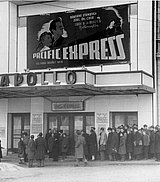
pią. 26.04.2019 | 18:00
prof. dr hab. Magdalena Saryusz-Wolska
Warszawa

nie. 10.03.2019 | 17:00
dr Sabine Stach
prof. dr hab. Magdalena Saryusz-Wolska
Warszawa
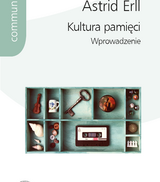
Prezentacja książki
prof. dr hab. Magdalena Saryusz-Wolska
Warszawa
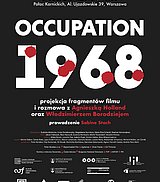
Dyskusja panelowa
Kinga Wołoszyn-Kowanda
prof. dr hab. Magdalena Saryusz-Wolska
Warszawa
dr Sabine Stach
prof. dr hab. Magdalena Saryusz-Wolska
Bonn
czw. 27.09.2018 | 13:00
prof. dr hab. Miloš Řezník
prof. dr hab. Magdalena Saryusz-Wolska
dr Ralf Meindl
Münster
Aktualności
kwi

Święta
W dniach od 1.05.2024 do 5.05.2024 Instytut i Biblioteka będą zamknięte.
kwi
Odwołane: Prof. Dr hab. Susannah Eckersley (Newcastle): Museums as democratic public space? Memory, Migration and Belonging in Germany
Z przykrością informujemy, że wykład pani prof. Susannah Eckersley (Newcastle)…
kwi